Speaking
I give talks about why the physical world is getting more valuable as the digital one gets cheaper, and what that does to entertainment, cities, work, and the way people spend a Saturday. It's the argument of You Have to Be There, a book in progress, and it's the talk I'm booking through 2027: industry conferences, corporate events, and, as the book gets closer, the author-series stage. I've spoken at CES every year for a decade. This is the first time I've had a name for what I was circling.
Talks
I give talks about why the physical world is getting more valuable as the digital one gets cheaper, and what that does to entertainment, cities, work, and the way people spend a Saturday. It's the argument of You Have to Be There, a book in progress, and it's the talk I'm booking through 2027: industry conferences, corporate events, and, as the book gets closer, the author-series stage. I've spoken at CES every year for a decade. This is the first time I've had a name for what I was circling.
You Have to Be There
The keynote. Forty-five minutes, or thirty and a conversation.
The talk is one sentence long: everything you can generate is getting cheaper, and everything you have to show up for is getting more expensive. The rest is evidence. Bad Bunny skipped the mainland and made the world fly to San Juan for thirty nights. A fully remote software company pays to fly every employee to one city once a year, and calls it culture. And people who tell pollsters they never leave the house are paying $175 to be walked through a six-story Paris Opera House at midnight. I trace how presence went from free to the priciest item in every category, why the analysts keep calling it revenge spending (the fade has been due any minute for about four years now), and why AI, of all things, is the best thing that ever happened to the experiences no machine can make. It's built for a general room. Nobody needs to know what a themed land is, and the folks who do will hear their own business in it.
Next: IAAPA Expo, Orlando, November 2026.
Between the Stadium and the Headset
For rooms that build things: themed entertainment, media, venues, real estate. Forty-five minutes.
The audience has changed more than the venues have. A generation raised on Minecraft and the feed expects to touch the story, be the main character, and talk through the show, and they're carrying those expectations into theaters, parks, museums, and stadiums designed for people who sit quietly in the dark. So this talk is about what's being built for them: the shared-reality venues like Cosm and the Sphere that sit between a live event and a headset, the persistent worlds that trade a single visit for a relationship, and the mirror-room trick that lets a crowd of hundreds each feel like the center of it. Plus the failures, because the Glasgow Willy Wonka experience and Utah's Evermore teach more than the hits do. It's the back half of the book, aimed at people with a budget and a site plan.









Formats
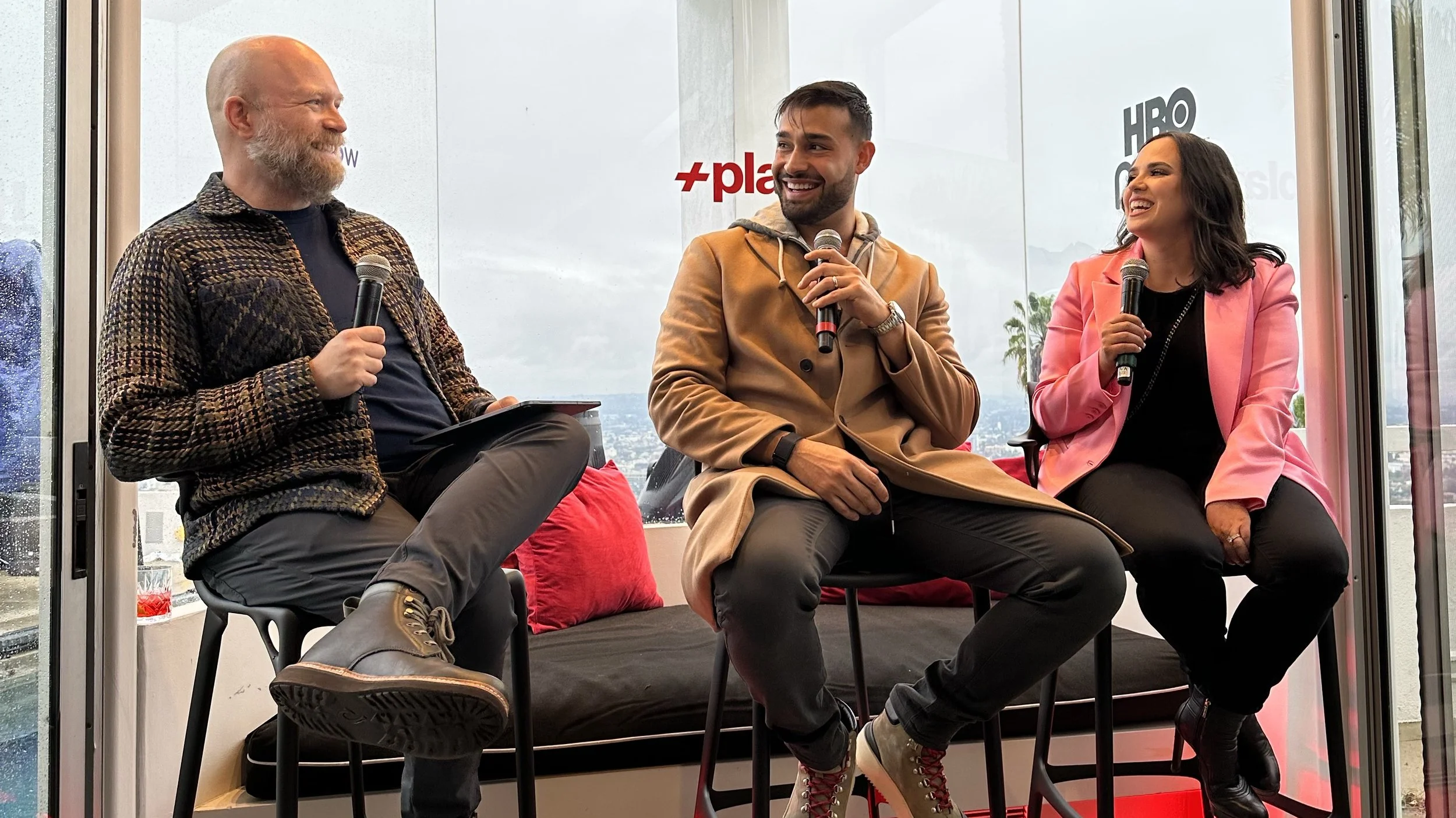
Keynote
Fireside Chat
Panel Discussion
Interview
Podcast Recording
Virtual Keynote
I also still take the forecast brief. A decade of writing Outlook means I have a well-worn talk on where media, entertainment, and technology are headed next year, and I'll tune it to your industry. Half-day workshops for teams by arrangement.
For your program
Adam J. Simon writes and speaks about what stays scarce when anything can be generated: the experience of being in a room with other people. He is the author of You Have to Be There, a book in progress, wrote IPG Media Lab's annual Outlook forecast for eleven years, and co-created, produced, and hosted Floor 9, which Adweek named Best Thought Leadership Podcast of 2020. Since 2025 he has led emerging-technology research at Disney Experiences. He has spoken at CES for ten years running.
Headshot and a longer bio on request.